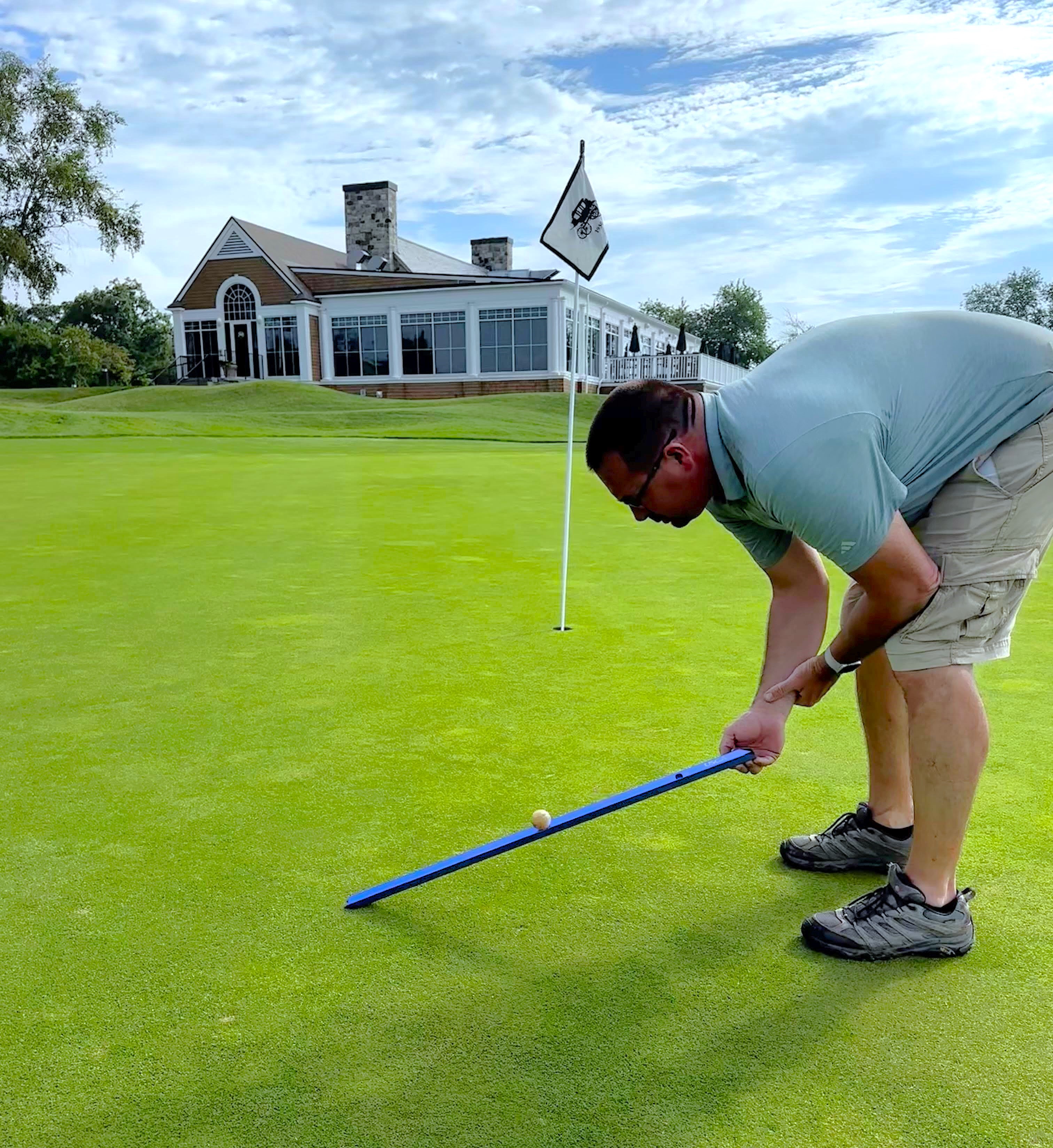
Dave Ousterhout
Superintendent, Concord Country Club, Concord, NH
THE INTERVIEW
Located just outside of the capital city of New Hampshire, Concord Country Club has been a source of local pride since 1930. And taking Concord CC to the next level in the 21st century is Superintendent Dave Ousterhout. Dave talked to us recently about being an early adaptor of the GS3 ball and DEACON management system and how he is using it to amplify his data collection process.
Q: How long have you had the GS3 ball?
Dave: We're sitting on about a year now.
Q: How did you learn about the GS3 ball?
Dave: Obviously, we see all the USGA information that comes out, and my two assistants and I were really intrigued. So, we pulled the trigger. We got two GS3 balls; the DEACON subscription and we were off and running. Sold itself after that. After two weeks of rolling the ball and getting information, we were loving it.
Q: What do you like most about GS3?
Dave: I think the data behind what we do is our biggest benefit. We started to piecemeal it together last year. We have a bunch of data now, we're able to look at it, show people, and support what we already know with that information.
Q: What GS3 ball metrics are most important to you?
Dave: We look at the full package and we've kind of taken it to that level this year. We just played around with all these different scenarios. We started collecting a few other data points. And now we're building a pretty good little database of stuff here, and we really like it.
Q: You have a short season up in New Hampshire. Does that make data collection even more important?
Dave: We found it to be really important in this spring because it was cold and wet, and we had to make decisions that we don't normally have to make. And it was nice to have that data to back those decisions up. It was also nice to see that we weren't impacting playability on putting surfaces quite as bad as we thought we might by not mowing or by not rolling.
Q: Are you also using the drop fixture?
Dave: Yep, we are. Pretty key for us, after watering to see, did we overdo it? Did that big soak soften things up too much or did it not? They're all interconnected with one another. When they’re firm, the green's going to probably be a little bit faster. A soft green is probably going to be a little bit slower. So, when you start talking about one versus the other, it's nice to have the full picture.
Q: Has GS3/DEACON changed your maintenance practices in any way?
Dave: It's a good question. I think right now, I can sit here and say yes, it has. This spring has been kind of crazy to us. I'm mowing at the highest height-of- cut that I've ever mowed on June 18th at Concord Country Club. And I have average green speeds, six to eight inches higher than the goal. We're also not rolling as often as we had been, mostly because it's been too wet and raining. But we've also not seen a decline in smoothness, trueness or speed. So, yes, I think it is affecting what we're doing.
Q: Have you already gotten a return on your investment from GS3 by not rolling or mowing on days that you thought you might have needed it?
Dave: Yep, no doubt.
Q: What would you say to superintendent who might be considering the GS3 ball and DEACON, but they're on the fence?
Dave: I've had a lot of fun conversations with guys about what we're able to do with this data. You know, I think guys need to try it. They need to see it. They need to put their hands on it. And some of them will find it in their budgets to buy and they'll find it worthwhile. Be open-minded and give it a chance, because it will change how you go about looking at things.