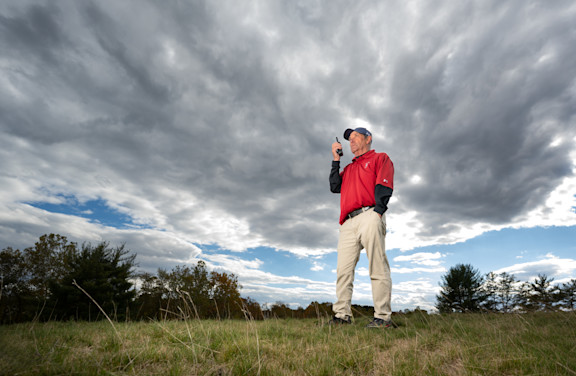
Paxon Hollow Country Club
Steve Stephens, Superintendent
Formed in the fall of 1926 just west of Philadelphia, Paxon Hollow Country Club opened as a nine-hole golf course the following summer. Once a private club, Paxon Hollow became a public course in the 1960s. The course was then purchased by Marple Township, giving all local residents a chance to play this rolling, historically designed track.
Helping him along the way has been his local USGA Green Section agronomist and the course consulting visits that have taken place at Paxon Hollow during his time there. “The relationship has been going on for thirty years, before I got here,” says Stephens. “I started first with Stan Zontek, and then Darin (Bevard) came along about five- or six-years in.”
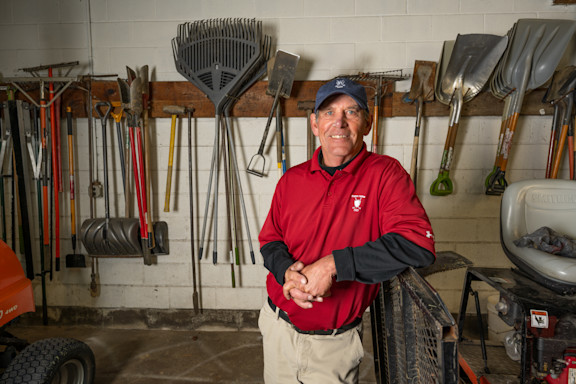
The relationship has evolved over the years into a friendship, with someone who knows the course almost as well as Stephens does. “It’s a voice to listen to,” he says. “He knows my programs, what fungicides I put down, my problem areas, etc. It’s down to me to execute them, but I feel better after he takes a look at everything and gives me feedback.”
Since Paxon Hollow is owned by the township, Stephens works with several layers of government. “We have several supervisors and a township manager who have oversight of the course. Darin’s post-analysis report on the course is shared with all of them. So, they all know what we’re doing down here and how things are going.”
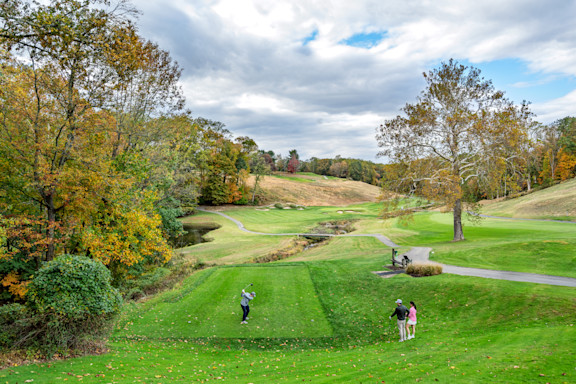
With course renovation slated to begin on December 1, 2025, 2026 promises to be a busy year for Stephens and Paxon Hollow. Two entirely new opening holes will be built. The new practice range will be dual function and can be also used a six-hole par three course for juniors and beginners. A daunting task, but thankfully for Stephens, he’s had another set of eyes on the project. “Darin has been involved in everything,” he says. “He knows what the holes are and what they’re going to be. All the stuff we’ve been dealing with he’s been involved and that makes me feel a whole lot better.”
Dan O’Malley, Paxon Hollow’s PGA director of golf agrees. “Naturally, Darin does an annual report for us, which is great. But Darin is also a source that Steve relies on for any questions he might have. He’ll come out several times during the season and ride the course with Steve, looking at problem areas and how they’re handling certain situations.”
So, what would Stephens say to those who have never had a Course Consulting visit from a USGA agronomist? “I think if they would try it, they would do it every single year,” he says. “Not only do they help me out with problems on the course, they help with everything.”